

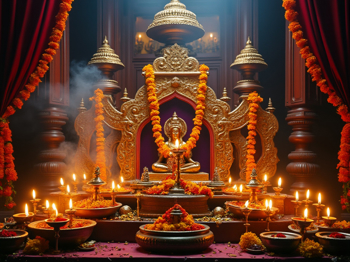
Ananta Padmanabha Vratam, also known simply as Ananta Vratam, is a significant Hindu observance dedicated to Lord Vishnu in his infinite (Ananta) form. This ritual is traditionally performed on the Ananta Chaturdashi, which falls on the 14th day of the bright half of the lunar month of Bhadrapada (August-September). Devotees undertake this vratam with great devotion and sincerity to seek the blessings of Lord Vishnu for a prosperous, peaceful, and fulfilling life.
The word "Ananta" means endless or infinite, and "Padmanabha" refers to Lord Vishnu, who is often depicted with a lotus emerging from his navel, symbolizing creation and the continuity of life. The vratam is performed by individuals and families to invoke divine protection, remove obstacles, and achieve spiritual and material well-being.

The Ananta Padmanabha Vratam holds deep spiritual and symbolic significance. It is believed that by observing this vratam with devotion, one can please Lord Vishnu, who grants his infinite grace and blessings. The ritual symbolizes the eternal nature of the soul and the continuous cycle of creation, preservation, and dissolution that Lord Vishnu oversees.
During the puja, a sacred thread, known as Ananta Sutra, is tied around the wrist, symbolizing the unbreakable bond between the devotee and the divine. This thread serves as a reminder of the eternal connection with Lord Vishnu and the protection he offers against all adversities.
Protection from Difficulties: Observing this vratam is believed to offer divine protection against all forms of obstacles, misfortunes, and difficulties in life.
Spiritual Growth: The vratam helps in attaining spiritual growth by deepening the devotee's connection with Lord Vishnu, promoting inner peace and self-realization.
Prosperity and Abundance: Performing the puja brings blessings of wealth, prosperity, and abundance in various aspects of life, ensuring the well-being of the family.
Longevity and Health: Devotees believe that observing Ananta Vratam contributes to a long and healthy life by invoking Lord Vishnu's blessings for physical and mental well-being.
Harmony in Relationships: The ritual fosters harmony and unity within the family, strengthening bonds and promoting understanding among loved ones.
Fulfillment of Wishes: It is believed that those who observe this vratam with faith and devotion can have their sincere wishes and desires fulfilled by the grace of Lord Vishnu.
Ananta Padmanabha Vratam is a powerful and revered ritual that not only honors Lord Vishnu but also brings immense spiritual and material benefits to those who observe it with dedication.
Performing the Ananta Padmanabha Vratam involves a series of rituals and prayers that must be conducted with devotion and attention to detail. Here is a step-by-step guide to help you perform this vratam:
Abhishekam (Bathing the Deity): Perform an abhishekam by gently pouring water, milk, honey, and other offerings over the deity, if you are using an idol. If it's a picture, sprinkle water and offer sandalwood paste.
Alankaram (Decoration): After the abhishekam, dress the deity with fresh clothes, apply sandalwood paste, turmeric, and kumkum, and decorate with flowers and garlands.
Offerings (Naivedyam): Offer fruits, sweets, betel leaves, betel nuts, and coconut to the deity. Light lamps and incense sticks.
Tying the Ananta Sutra: The most important part of the vratam is tying the Ananta Sutra (sacred thread) on your right wrist (for men) or left wrist (for women). The thread represents the infinite blessings and protection of Lord Vishnu. While tying the thread, chant the Ananta Sutra Mantra:
Anantam Punyaphaladam Kartavyam Niyamena Hi |
Anantavratasamyuktam Shantim Bhuktim Cha Mokshadam ||
Aarti: Perform the aarti by waving a lit camphor lamp in front of the deity. Sing the aarti song, praising Lord Vishnu.
By following these steps with sincerity and devotion, you can successfully perform the Ananta Padmanabha Vratam and seek the infinite blessings of Lord Vishnu.
Ananta Padmanabha Vratam is a significant Hindu observance dedicated to Lord Vishnu, particularly in his form as Ananta Padmanabha. This vratam is traditionally observed on the Ananta Chaturdashi, which falls on the 14th day of the bright fortnight in the month of Bhadrapada (August-September). The vratam is observed for the fulfillment of desires, prosperity, and the removal of obstacles.
Once upon a time, there was a great king named Sushena who ruled over Hastinapura. He was righteous and devoted to Lord Vishnu. His wife, Queen Sushila, was also very pious. However, despite their virtuous nature, the couple faced a lot of challenges in their life. They had no children, and the kingdom was suffering from many difficulties.
One day, Sage Narada visited King Sushena and advised him to perform the Ananta Padmanabha Vratam to overcome his problems. Sage Narada told the king that this vratam is very powerful and that anyone who performs it with devotion will be blessed by Lord Vishnu.
Following the sage's advice, King Sushena and Queen Sushila performed the vratam with great devotion. They fasted, recited the prayers, and made offerings to Lord Vishnu in his Ananta Padmanabha form. They also tied a sacred thread (Ananta Sutra) on their wrists as a symbol of their devotion.
During the vratam, they heard a divine voice that narrated the story of the vratam to them:
In ancient times, there lived a Brahmin named Sumant who was very pious. He had a daughter named Sushila, who was also very devout. Sushila was married to a sage named Kaundinya. After their marriage, Sushila observed that her husband's family was living in extreme poverty. One day, she came across some women who were performing the Ananta Padmanabha Vratam, and they explained the significance of the vratam to her.
Sushila decided to perform the vratam for the welfare of her family. She observed the fast, tied the Ananta Sutra on her wrist, and worshiped Lord Vishnu with great devotion. After the vratam, her husband's fortunes began to change. He became prosperous, and their family life became happy and content.
However, Kaundinya, unaware of the vratam's significance, one day became suspicious of the sacred thread his wife wore and removed it in anger. As soon as he did so, they lost all their wealth, and their life returned to poverty. Realizing his mistake, Kaundinya repented and asked his wife to tell him about the vratam.
Sushila explained the vratam to him, and they both decided to perform it again with utmost devotion. This time, they regained their prosperity, and their life was filled with happiness. Lord Vishnu, pleased with their devotion, appeared before them and blessed them with eternal happiness and prosperity.
After hearing this divine story, King Sushena and Queen Sushila completed the vratam and continued to observe it every year. As a result, they were blessed with a son, and their kingdom prospered. The king and queen continued to live a life of piety and devotion, and their people also followed the vratam, bringing prosperity and happiness to the entire kingdom.
The Ananta Padmanabha Vratam is a powerful observance that symbolizes the eternal and infinite nature of Lord Vishnu, who is the protector of the universe. The tying of the Ananta Sutra represents the devotee's commitment to righteousness and devotion to the Lord. Observing this vratam is believed to remove all obstacles, bring prosperity, and fulfill the desires of the devotees.
The vratam is observed with great devotion and faith, and it is believed that those who perform it sincerely will be blessed with happiness, prosperity, and the grace of Lord Vishnu.