

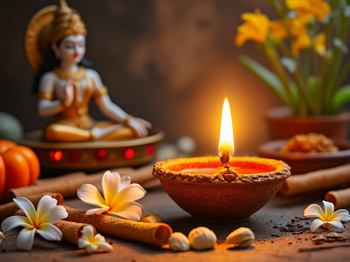
Durga Ashtami Vratam is one of the most significant and revered observances in the Hindu calendar, celebrated on the eighth day (Ashtami) of the Shukla Paksha (waxing phase of the moon) during the month of Ashwin. This day is dedicated to Goddess Durga, the divine mother who symbolizes strength, courage, and protection. Durga Ashtami holds immense spiritual and cultural importance, especially during the Navaratri festival, where it is considered the most auspicious day to worship the Goddess in her fierce form, Mahishasura Mardini, the slayer of the buffalo demon Mahishasura.

Durga Ashtami Vratam holds deep spiritual significance as it marks the victory of good over evil. The rituals performed on this day are believed to invoke the Goddess's blessings for protection, prosperity, and the destruction of negative forces. The puja is an expression of devotion and surrender to the divine feminine energy, seeking her guidance and support in overcoming life's challenges. Devotees fast, perform elaborate rituals, and recite sacred hymns to honor the Goddess and to align themselves with her powerful energy.
Spiritual Protection: Observing the Vratam is believed to invoke the protection of Goddess Durga, shielding devotees from evil influences and negative energies.
Strength and Courage: Devotees seek the Goddess’s blessings for strength and courage to face and overcome obstacles and challenges in life.
Prosperity and Well-being: The puja is said to attract wealth, health, and overall well-being, ensuring a prosperous and fulfilling life.
Purification of Mind and Body: Fasting and performing rituals on Durga Ashtami helps purify the mind and body, leading to spiritual elevation and inner peace.
Victory over Adversity: The puja symbolizes the triumph of good over evil, inspiring devotees to remain steadfast and positive in difficult times.
Spiritual Growth: Regular observance of Durga Ashtami Vratam fosters spiritual growth, deepening the devotee's connection with the divine and enhancing their spiritual journey.
Family Harmony and Happiness: Worshipping Goddess Durga as a family tradition brings harmony, unity, and happiness within the household, fostering stronger familial bonds.
By observing Durga Ashtami Vratam, devotees not only honor the divine mother but also align themselves with the powerful forces of good, ensuring a life filled with divine grace and protection.
Performing Durga Ashtami Vratam with devotion and precision is essential to seek the blessings of Goddess Durga. Here is a step-by-step guide to help you carry out the Vratam:
Offering the Panchopachara: Perform the Panchopachara puja by offering five sacred items to the Goddess:
Chanting the Mantras: Recite the Durga Ashtottara Shatanamavali (108 names of Durga) or any other hymns and prayers dedicated to the Goddess, such as the Durga Chalisa or Devi Mahatmyam (Durga Saptashati).
Kumari Puja (Optional): In some traditions, especially in North India, a Kumari Puja is performed, where young girls (considered to be the manifestations of Goddess Durga) are worshipped and offered food, clothes, and gifts.
By following these steps with devotion and sincerity, you can perform Durga Ashtami Vratam and seek the blessings of Goddess Durga for protection, prosperity, and spiritual upliftment.
The story behind Durga Ashtami Vratam is rooted in the battle between Goddess Durga and the demon king Mahishasura, symbolizing the eternal struggle between good and evil. Here is the detailed version of the story that explains the significance of Durga Ashtami:
Mahishasura, a powerful demon, was born to a demon father and a buffalo mother. As a result, he had the ability to change forms between a man and a buffalo. Through severe penance and devotion, Mahishasura earned a boon from Lord Brahma, which made him nearly invincible. Brahma granted him the power that no man, demon, or god could kill him, ensuring that he would not be defeated by any male warrior.
With this newfound power, Mahishasura became arrogant and unleashed terror upon the world. His army of demons caused destruction on Earth, and they even waged war against the heavens, defeating the gods and driving them out of their celestial abode. Unable to defeat Mahishasura due to the boon, the gods were in despair and sought a solution.
To save the universe from the tyranny of Mahishasura, the Trimurti (Brahma, Vishnu, and Shiva) and other gods decided to combine their divine powers to create a powerful female warrior, since Mahishasura’s boon did not include protection from a woman. From the collective energy of the gods, Goddess Durga was born.
Goddess Durga emerged as a beautiful and fierce warrior goddess with ten arms, each carrying the most potent weapons bestowed by the gods:
Riding a lion, Durga radiated power and valor. Her divine energy shook the heavens and the Earth.
When Mahishasura learned about Durga's arrival, he underestimated her power, mocking the gods for sending a woman to fight him. But undeterred, Goddess Durga challenged him to battle.
The battle raged for nine days between Durga and Mahishasura’s forces. Mahishasura kept changing his forms—from a lion to an elephant, and finally to his most powerful form, a buffalo. Despite his shape-shifting abilities, Goddess Durga fought him fiercely.
On the eighth day, known as Ashtami, Durga finally overpowered Mahishasura. In his buffalo form, Mahishasura charged at Durga, but she leapt onto his back, pinned him down with her foot, and pierced his heart with her trident (trishul). This marked the victory of Goddess Durga over the demon king, bringing an end to the reign of terror.
Durga Ashtami, the eighth day of Navratri, commemorates this decisive moment in the battle when Durga defeated Mahishasura. It represents the victory of good over evil, righteousness over wickedness, and divine feminine power over demonic forces.
On this day, devotees worship Durga as the fierce protector and slayer of demons. She is invoked in her form as Mahishasura Mardini, the killer of Mahishasura, and her devotees believe that by worshipping her on Durga Ashtami, they will be protected from negative influences, misfortune, and obstacles in their lives.
The story also highlights the theme of Shakti—the divine feminine energy that pervades the universe and has the power to overcome even the most formidable adversaries. It emphasizes that inner strength, courage, and faith in righteousness can help overcome any challenges or evils in life.
An important ritual performed on Durga Ashtami is the Kanya Puja (or Kumari Puja), where young girls (representing the nine forms of Durga) are worshipped as manifestations of the goddess. This tradition stems from the belief that young girls embody purity, innocence, and divine energy. During the Kanya Puja, devotees offer food, clothes, and gifts to the girls, seeking their blessings for a prosperous and righteous life.
The story of Mahishasura's defeat at the hands of Goddess Durga is a timeless reminder that good will always triumph over evil. It also serves to illustrate the immense power of the divine feminine force, or Shakti, which can destroy negativity and bring balance and peace to the world. Durga Ashtami Vratam is observed to honor this powerful victory and to seek the goddess’s blessings for protection, strength, and success in life.