

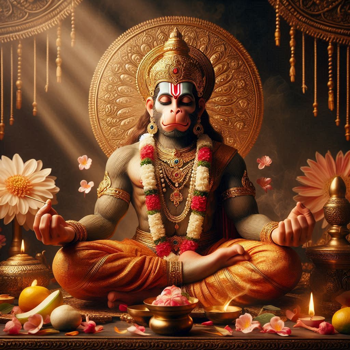
The Hanuman Chalisa Paath is a revered spiritual event dedicated to Lord Hanuman, one of the most beloved deities in Hinduism. This festival brings together devotees who recite the Hanuman Chalisa, a powerful 40-verse hymn that glorifies the strength, devotion, and unwavering loyalty of Lord Hanuman towards Lord Rama. The recitation of the Hanuman Chalisa during this festival is believed to invoke divine blessings, providing spiritual solace, and protection from all forms of negativity. As devotees chant the verses in unison, the atmosphere becomes charged with divine energy, fostering a deep sense of community and faith.

Devotional Fervor: The Hanuman Chalisa Paath is a significant expression of devotion towards Lord Hanuman, who is revered for his boundless strength, loyalty, and devotion. This festival deepens the connection between the devotees and the divine.
Cultural Heritage: The event upholds the rich cultural and religious traditions of Hinduism, preserving the practice of communal prayer and chanting, which have been passed down through generations.
Spiritual Purification: The recitation of the Hanuman Chalisa is believed to purify the mind and soul, helping devotees to overcome obstacles, fears, and challenges in their lives.
Collective Prayer: The festival is a time for collective prayer, bringing people together from all walks of life to share in the spiritual experience, fostering unity and communal harmony.
Protection from Negativity: Chanting the Hanuman Chalisa is believed to ward off evil spirits and negative energies, providing a shield of protection to devotees.
Overcoming Challenges: Lord Hanuman is known as the remover of obstacles. Reciting the Chalisa during the festival is thought to help individuals overcome personal and professional challenges.
Mental Peace and Focus: The rhythmic chanting of the verses induces a meditative state, promoting mental peace, clarity, and focus.
Strength and Courage: Devotees believe that reciting the Hanuman Chalisa instills inner strength and courage, helping them face life's difficulties with resilience.
Health Benefits: It is said that regular recitation can improve physical health by reducing stress, anxiety, and mental fatigue, leading to overall well-being.
Spiritual Growth: Engaging in the collective recitation of the Hanuman Chalisa during the festival aids in spiritual growth, deepening one's understanding of devotion, faith, and the divine.
Performing the Hanuman Chalisa Paath (recitation of the Hanuman Chalisa) is a spiritual practice dedicated to Lord Hanuman, a revered figure in Hinduism. Here's a step-by-step guide to performing the Hanuman Chalisa Paath:
Remember, the most important aspect of the Hanuman Chalisa Paath is the sincerity and devotion with which it is performed. Whether done alone or in a group, the spiritual benefits are profound.
Invocation:
Shri Guru Charan Saroj Raj,
Nij manu Mukuru Sudhaari,
Barnau Raghubar Bimal Jasu,
Jo daayaku phal chaari.
With the dust of the Guru's lotus feet,
I cleanse the mirror of my mind and sing the pure glory of Lord Raghuvara,
The bestower of the four fruits of life: dharma (righteousness), artha (wealth), kama (pleasures), and moksha (liberation).
Buddhi Heen Tanu Jaanike,
Sumiraun Pavan-Kumaar,
Bal Buddhi Vidyaa Dehu Mohi,
Harahu Kalesh Vikaar.
Knowing myself to be ignorant, I meditate upon you, O son of the wind,
Grant me strength, wisdom, and knowledge,
And remove my miseries and blemishes.
Verse 1:
Jai Hanuman Gyaan Guna Saagar,
Jai Kapis Tihun Lok Ujaagar.
Victory to Hanuman, the ocean of knowledge and virtues,
Victory to the monkey god who illuminates the three worlds.
Verse 2:
Raamdoot Atulit Bal-Dhaamaa,
Anjani-Putra Pavansut Naamaa.
You are the messenger of Lord Rama, the repository of incomparable strength,
You are known as Anjani’s son and Pavana's (Wind God’s) son.
Verse 3:
Mahaa-Beer Bikram Bajrangi,
Kumati Nivaar Sumati Ke Sangi.
You are a mighty hero, of valiant and courageous acts,
You dispel evil thoughts and are a companion of good sense and wisdom.
Verse 4:
Kanchan Baran Biraaj Subesaa,
Kaanan Kundal Kunchit Keshaa.
You possess a golden complexion, and your clothes are fine,
You wear earrings and have curly hair.
Verse 5:
Haath Bajra Aur Dhvaja Biraajai,
Kaandhe Moonj Janeu Saajai.
In one hand you hold a thunderbolt and in the other a banner,
You wear the sacred thread across your shoulder.
Verse 6:
Shankar Suvan Kesari Nandan,
Tej Pratap Mahaa Jag Vandhan.
You are the incarnation of Lord Shiva and the son of Kesari,
You are revered by the whole world for your courage and valor.
Verse 7:
Vidyavaan Guni Ati Chatur,
Raam Kaaj Karibe Ko Aatur.
You are wise, virtuous, and supremely intelligent,
You are ever eager to carry out Lord Rama’s work.
Verse 8:
Prabhu Charittra Sunibe Ko Rasiya,
Raam Lakhan Sitaa Mann Basiya.
You delight in listening to the deeds of Lord Rama,
Your mind always dwells on Rama, Lakshmana, and Sita.
Verse 9:
Sukshma Roop Dhari Siyahi Dikhava,
Vikat Roop Dhari Lank Jarava.
In a subtle form, you appeared before Sita,
In a terrifying form, you set Lanka ablaze.
Verse 10:
Bhima Roop Dhari Asur Sanhare,
Raamchandra Ke Kaaj Sanvare.
Assuming a gigantic form, you destroyed the demons,
Thus accomplishing the mission of Lord Rama.
Verse 11:
Laaye Sajivan Lakhan Jiyaaye,
Shri Raghubeer Harashi Uralaye.
You brought the Sanjeevani herb and revived Lakshmana,
Which delighted Lord Rama immensely.
Verse 12:
Raghupati Keenhi Bahut Badaayi,
Tum Mama Priya Bharat-Sam Bhaiyi.
Lord Rama praised you greatly,
Saying, "You are dear to me as my brother Bharata."
Verse 13:
Sahas-Badan Tumharo Jas Gaavein,
Asa kahi Shripati Kanth Laagave.
The thousand-headed Sheshnag sings of your glory,
As Lord Rama embraced you.
Verse 14:
Sankadik Brahmaadi Muneesaa,
Narad Saarad Sahit Aheesaa.
Sanaka, Brahma, the sages, Narada, Saraswati,
And Sheshnag, all praise you.
Verse 15:
Jam Kuber Digpaal Jahan Te,
Kavi Kovid Kahi Sake Kahaan Te.
Yama, Kubera, and the guardians of the directions,
The poets and scholars, cannot fully describe your glories.
Verse 16:
Tum Upkaar Sugreevahin Keenhaa,
Raam Milaaya Raajpad Deenha.
You helped Sugriva and introduced him to Lord Rama,
And thus, he regained his kingdom.
Verse 17:
Tumharo Mantro Vibheeshan Maanaa,
Lankeshwar Bhaye Sab Jag Jaanaa.
Vibhishana heeded your advice,
And became the king of Lanka, known across the world.
Verse 18:
Yug Sahastra Jojan Par Bhaanu,
Leelyo Taahi Madhur Phal Jaanu.
You swallowed the sun,
Covering a distance of sixteen thousand miles, thinking it to be a sweet fruit.
Verse 19:
Prabhu Mudrikaa Meli Mukh Maahi,
Jaladhi Laanghi Gaye Acharaj Naahi.
Carrying Lord Rama’s ring in your mouth,
You crossed the ocean; this is no wonder for you.
Verse 20:
Durgam Kaaj Jagat Ke Jete,
Sugam Anugrah Tumhre Tete.
All the difficult tasks in the world,
Become easy by your grace.
Verse 21:
Raam Duwaare Tum Rakhawaare,
Hot Na Aagya Binu Paisaare.
You are the guardian at Lord Rama's door,
No one can enter without your permission.
Verse 22:
Sab Sukh Lahen Tumhaari Sarnaa,
Tum Rakhshak Kaahu Ko Darnaa.
All comforts and happiness come to those who seek your refuge,
Under your protection, one has nothing to fear.
Verse 23:
Aapan Tej Samharo Aapei,
Teenon Lok Haank Te Kaapei.
You alone can control your strength,
And all the three worlds tremble at your roar.
Verse 24:
Bhoot Pisaach Nikat Nahin Aavei,
Mahaveer Jab Naam Sunaavei.
Evil spirits and ghosts do not come near,
When they hear the name of the great hero, Hanuman.
Verse 25:
Naashai Rog Hare Sab Peeraa,
Japata Nirantar Hanumat Beeraa.
All diseases and pain are eradicated,
By constant chanting of your name, O Hanuman!
Verse 26:
Sankat Se Hanuman Chhudaavei,
Man Kram Vachan Dhyaan Jo Laavei.
Hanuman frees those from their troubles,
Who meditate on him with mind, deed, and word.
Verse 27:
Sub Par Raam Tapasvee Raajaa,
Tinke Kaaj Sakal Tum Saajaa.
The ascetic King Rama is supreme,
And you accomplish all his tasks.
Verse 28:
Aur Manorath Jo Koi Laave,
Sohi Amit Jeevan Phal Paave.
Anyone who comes to you with a desire,
Obtains the limitless fruit of life.
Verse 29:
Chaaro Yug Partaap Tumhaaraa,
Hai Prasiddha Jagat Ujiyaaraa.
Your glory is renowned in all the four ages,
And your fame illuminates the entire world.
Verse 30:
Saadhu Sant Ke Tum Rakhwaare,
Asur Nikandan Raam Dulaare.
You are the protector of saints and sages,
The destroyer of demons, and dear to Lord Rama.
Verse 31:
Ashta Siddhi Nau Nidhi Ke Daataa,
Asa Var Deen Jaanakee Maataa.
You are the bestower of the eight supernatural powers and the nine treasures,
This boon was given to you by Mother Sita.
Verse 32:
Raam Rasaayan Tumhare Paasaa,
Sadaa Raho Raghupati Ke Daasaa.
You hold the essence of devotion to Rama,
May you always remain the servant of Lord Raghupati.
Verse 33:
Tumhare Bhajan Raam Ko Paave,
Janam Janam Ke Dukh Bisraave.
By singing your praises, one gains Lord Rama's favor,
And the sufferings of many lifetimes are erased.
Verse 34:
Ant-Kaal Raghupati Pur Jaai,
Jahan Janma Hari-Bhakt Kahaaee.
At the time of death, one goes to the abode of Lord Rama,
Where one is known as a devotee of Hari (Vishnu).
Verse 35:
Aur Devtaa Chitt Na Dharaee,
Hanumat Sei Sarva Sukh Karaee.
No other deity can dwell in the mind,
For Hanuman alone grants all happiness.
Verse 36:
Sankat Kate Mite Sab Peeraa,
Jo Sumire Hanumat Balbeeraa.
All troubles and pain are removed,
For those who remember the mighty Hanuman.
Verse 37:
Jai Jai Jai Hanuman Gosaain,
Kripaa Karahu Gurudev Kee Naain.
Victory, victory, victory to you, O Hanuman, Lord of senses,
Grant me your grace as the revered Guru.
Verse 38:
Jo Shat Baar Paath Kar Koi,
Chhootahin Bandi Mahaa Sukh Hoi.
Whoever recites this Hanuman Chalisa a hundred times,
Will be released from bondage and will enjoy great happiness.
Verse 39:
Jo Yah Padhe Hanuman Chaalisaa,
Hoy Siddhi Saakhi Gaurisaa.
Whoever reads the Hanuman Chalisa,
Will achieve success; Lord Shiva himself bears witness.
Verse 40:
Tulsidaas Sadaa Hari Cheraa,
Keeje Naath Hriday Mahn Deraa.
Tulsidas, the eternal servant of Hari,
Prays, "O Lord, reside in my heart."
Concluding Doha:
Pavantanaye Sankat Haran,
Mangal Moorti Roop,
Raam Lakhan Sitaa Sahit,
Hriday Basahu Sur Bhoop.
O Son of the Wind, remover of distress,
Embodiment of auspiciousness,
Along with Rama, Lakshmana, and Sita,
May you reside in my heart, O King of gods.
This format emphasizes the original Sanskrit text while providing the English meaning in a distinguishable manner.