

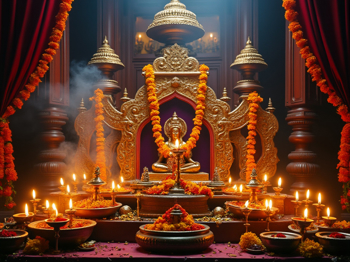
Haritalika Teej is a significant Hindu festival celebrated primarily by women, especially in the Indian states of Uttar Pradesh, Bihar, Rajasthan, and Madhya Pradesh, as well as in Nepal. This festival is dedicated to the goddess Parvati and commemorates her union with Lord Shiva. According to mythology, Haritalika Teej marks the day when Goddess Parvati undertook severe penance and austerities to win Lord Shiva as her husband. Her friends, or 'Haritalika,' kidnapped her to prevent her marriage to Lord Vishnu, as her father intended, which led to the festival's name.
Haritalika Teej is observed with great devotion and enthusiasm. Women fast, dress in vibrant red or green sarees, and adorn themselves with beautiful jewelry, symbolizing marital bliss. The festival is marked by singing, dancing, and offering prayers to Goddess Parvati, seeking her blessings for a happy and prosperous married life.

Marital Bliss: The puja is believed to invoke the blessings of Goddess Parvati for a long and fulfilling married life. Married women pray for the well-being and longevity of their husbands, while unmarried women seek an ideal life partner.
Spiritual Growth: Fasting and devotion during Haritalika Teej help in cultivating self-discipline and spiritual focus. The ritual is considered an act of devotion and surrender to divine will.
Cultural Preservation: Haritalika Teej plays a crucial role in preserving and promoting cultural traditions. It brings together women of different generations, fostering a sense of community and shared heritage.
Symbol of Dedication: The fast, often a 'Nirjala Vrat' (a fast without water), is a testament to the dedication and faith women have in their prayers. It symbolizes the strength and commitment in relationships.
Strengthened Marital Bond: The puja and fasting rituals are believed to strengthen the bond between husband and wife, ensuring harmony and understanding in married life.
Health and Longevity: It is believed that by observing the fast, women can ensure the good health and longevity of their husbands and themselves.
Spiritual Merit: Fasting and praying with sincerity and devotion during Haritalika Teej are said to earn spiritual merit, leading to a more fulfilling and peaceful life.
Empowerment and Resilience: The strict fasting and rituals associated with Haritalika Teej are seen as a means of empowering women, building their resilience, and reinforcing their inner strength.
Blessings for Future Generations: The observance of the festival is thought to bring blessings not only to the practitioner but also to future generations, ensuring their prosperity and success.
Haritalika Teej is thus a powerful confluence of faith, tradition, and community, offering both spiritual and practical benefits to those who observe it with devotion.
Performing the Haritalika Teej ritual involves a series of steps that are observed with great devotion and care. Below is a detailed guide on how to perform the Haritalika Teej puja:
This step-by-step procedure helps in observing Haritalika Teej with devotion and adherence to tradition, ensuring that the festival is celebrated in its true spirit.