
Masthead Image

floating page accent - lotus
Laksha1

Laksha Kumkumarchana

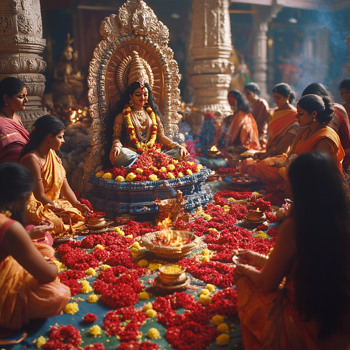
Laksha Kumkumarchana is a highly revered and auspicious ritual in Hinduism, dedicated primarily to the worship of Goddess Durga or other forms of the Divine Mother. The term "Laksha" signifies the number 100,000, while "Kumkumarchana" refers to the offering of kumkum (vermilion powder) to the deity. In this ritual, devotees offer kumkum 100,000 times while chanting specific mantras or the name of the deity, seeking blessings, protection, and the fulfillment of their desires. This puja is usually conducted with great devotion and is often a part of Navaratri celebrations or special occasions dedicated to the Goddess.

floating page accent - lotus

The significance of the Laksha Kumkumarchana lies in its deep spiritual and symbolic meaning. It is believed that the ritualistic offering of kumkum represents the devotee’s surrender and devotion to the Divine Mother. Kumkum, being a symbol of auspiciousness and energy, when offered in large quantities, is said to invoke the powerful presence of the Goddess, ensuring her grace and protection. The number 100,000 is symbolic of the intensity and magnitude of the devotion, emphasizing the importance of perseverance in spiritual practice. This puja is seen as a way to connect with the cosmic feminine energy and to seek the blessings of prosperity, health, and spiritual upliftment.

  • Spiritual Upliftment: The continuous chanting of mantras and offering of kumkum elevates the spiritual consciousness of the devotees, helping them to attain inner peace and harmony.

  • Divine Blessings: Performing this puja is believed to invoke the blessings of the Goddess, ensuring protection, prosperity, and success in all endeavors.

  • Removal of Obstacles: The ritual is said to remove negative energies and obstacles from the devotee’s life, paving the way for smooth and successful outcomes in personal and professional matters.

  • Health and Well-being: The grace of the Goddess, invoked through this puja, is believed to bestow good health and cure ailments, both physical and mental.

  • Fulfillment of Desires: Devotees perform Laksha Kumkumarchana to seek the fulfillment of their deepest desires, whether they are related to wealth, relationships, or spiritual goals.

  • Positive Energies: The large-scale offering of kumkum generates powerful positive vibrations, purifying the surroundings and filling the space with divine energy.

  • Strengthening of Devotion: The ritual deepens the devotee’s faith and strengthens their connection with the Divine, fostering a more profound spiritual relationship.

  • Community Harmony: Often performed as a collective ritual, it fosters a sense of unity and shared devotion among participants, enhancing social and communal bonds.

Laksha Kumkumarchana is not just a ritual; it is a powerful expression of devotion, faith, and surrender to the Divine Mother, bringing immense spiritual and material benefits to those who perform it with sincerity.

Step-by-Step Procedure to Perform Laksha Kumkumarchana

Performing Laksha Kumkumarchana is a detailed and devotional process that involves meticulous preparation and a deep sense of reverence. Here is a step-by-step guide to performing this powerful ritual:

1. Preparation

  • Choose the Date and Time: Consult a priest or use the Hindu Panchang (almanac) to select an auspicious date and time for the puja, preferably during Navaratri or other significant days dedicated to the Goddess.
  • Purify Yourself: Take a bath and wear clean, preferably traditional attire. Women usually wear sarees, and men wear dhotis.
  • Prepare the Puja Area: Clean and decorate the puja area. Place the idol or image of the Goddess on a decorated platform. Arrange the puja items such as kumkum, flowers, lamps, incense sticks, fruits, sweets, betel leaves, and nuts.

2. Setup and Invocation

  • Invoke Lord Ganesha: Begin by invoking Lord Ganesha, the remover of obstacles, with the recitation of Ganapati Mantras and offering of flowers and sweets to ensure the ritual proceeds smoothly.
  • Sankalpam (Vow): Take a sankalpam or vow, stating your intention to perform Laksha Kumkumarchana. This is done by holding water, rice, and flowers in your hands and reciting the sankalpa mantras.
  • Kalasha Sthapana: Establish a kalasha (a pot filled with water) symbolizing the presence of the Goddess. Decorate the kalasha with mango leaves, a coconut, and a piece of cloth or thread.

3. Main Ritual: Kumkumarchana

  • Lighting of Lamps: Light the lamps (deepam) and incense sticks (agarbatti) to invoke divine presence and purify the atmosphere.
  • Mantra Chanting: Begin chanting the specific mantra or 108 names of the Goddess. The most common mantra used is the Devi Mahatmyam or simply the name of the Goddess being worshiped, like "Om Dum Durgaye Namaha."
  • Kumkum Offering: With each repetition of the mantra, offer kumkum to the deity, placing a small amount of kumkum on the deity’s feet or a symbolic yantra. This process is repeated until 100,000 offerings are completed.
  • Group Participation: If done in a group, distribute the total number of offerings among the participants. Each person can chant and offer kumkum simultaneously, contributing to the total count.

4. Concluding the Ritual

  • Mangala Aarti: After completing the kumkum offerings, perform Mangala Aarti to the Goddess by waving camphor or a lamp in a circular motion before the deity, accompanied by ringing bells and chanting the Aarti song.
  • Prayers and Bhajans: Sing devotional songs (bhajans) in praise of the Goddess, creating a joyful and devotional atmosphere.
  • Offering Naivedyam: Offer the prepared sweets, fruits, and other items as Naivedyam (food offering) to the Goddess.
  • Pradakshina and Namaskara: Circumambulate the deity (pradakshina) three or more times and then offer prostrations (namaskara) to seek the blessings of the Goddess.

5. Prasad Distribution and Conclusion

  • Distribute Prasad: After the puja, distribute the prasad (offered food and kumkum) among all the participants as a token of the Goddess’s blessings.
  • Thanksgiving: Express gratitude to the Goddess and to all who participated in the ritual.
  • Cleanup: Finally, clean the puja area, symbolizing the completion of the ritual and the dispersion of the positive energies into the surroundings.

This step-by-step procedure ensures that Laksha Kumkumarchana is performed with devotion, discipline, and reverence, maximizing the spiritual benefits for all involved.