
Masthead Image

floating page accent - lotus
41Bdc756 E9d0 4Ea7 9207 Fd843a6ce18a

Navratri Puja

Navratri Puja is one of the most significant and widely celebrated Hindu festivals, dedicated to the worship of the Goddess Durga and her nine divine forms. "Navratri" translates to "nine nights," during which devotees engage in prayers, fasting, and rituals to honor the feminine energy of the universe, known as Shakti. The festival typically occurs twice a year—in the spring as Chaitra Navratri and in the autumn as Sharad Navratri. Each day of Navratri is devoted to a different manifestation of Goddess Durga, symbolizing the triumph of good over evil. The puja during this period is a time for spiritual reflection, inner purification, and devotion.

floating page accent - lotus
  • Celebration of Feminine Divinity: Navratri is a celebration of the divine feminine power, acknowledging the strength, wisdom, and nurturing aspects of Goddess Durga. It emphasizes the importance of women and feminine energy in creation, preservation, and destruction.

  • Victory of Good over Evil: The festival symbolizes the victory of good over evil, as depicted in the legend of Goddess Durga's battle and victory over the demon Mahishasura. It serves as a reminder that righteousness ultimately prevails.

  • Cultural Unity: Navratri is celebrated with great fervor across India, bringing together people of various regions and cultures. It fosters a sense of unity and shared heritage among the diverse Indian population.

  • Spiritual Awakening: The rituals and prayers during Navratri are designed to awaken the inner consciousness and connect with the divine. It is a time for devotees to seek blessings for health, prosperity, and spiritual growth.

  • Spiritual Cleansing: Engaging in Navratri Puja helps in purifying the mind, body, and soul, removing negative energies and thoughts.

  • Inner Peace and Harmony: The prayers and meditative practices during Navratri bring inner peace and a sense of harmony, reducing stress and anxiety.

  • Strengthened Faith: The rituals reinforce faith and devotion, encouraging a deeper connection with the divine and a stronger belief in the power of good.

  • Renewed Energy: Fasting and following a disciplined routine during Navratri revitalizes the body, providing renewed energy and vitality.

  • Emotional Healing: The focus on devotion and positive energy during Navratri aids in emotional healing, offering comfort and support in times of distress.

  • Prosperity and Well-being: Devotees believe that performing Navratri Puja brings blessings of prosperity, success, and overall well-being for themselves and their families.

  • Enhanced Focus and Discipline: The practice of fasting and daily rituals during Navratri helps improve focus, self-control, and discipline, which can be applied to other aspects of life.

Performing Navratri Puja is a sacred ritual observed during the nine days of Navratri, a festival dedicated to the worship of Goddess Durga. Here's a step-by-step guide to performing Navratri Puja:

Preparation for Navratri Puja:

  1. Clean the House:

    • Start by thoroughly cleaning your home, especially the prayer room or area where you will perform the puja.
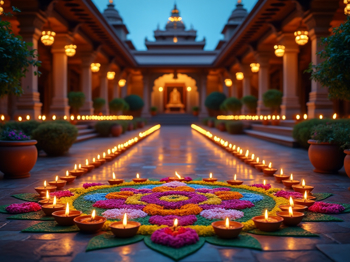
    • Decorate the puja room with flowers, rangoli, and light oil lamps (diyas).
  2. Set Up the Puja Altar:

    • Place a clean cloth on a raised platform or altar.
    • Position a picture or idol of Goddess Durga or any form of the Goddess like Maa Shailputri, Maa Brahmacharini, etc.
    • Arrange other idols or pictures of deities like Lord Ganesha, Lord Shiva, and Goddess Lakshmi as per your tradition.
    • Keep a kalash (a sacred pot) filled with water, mango leaves, and a coconut on the altar.
    • Place a diya (oil lamp) and incense sticks nearby.
  3. Gather Puja Items:

    • Ensure you have the necessary items like roli (kumkum), akshat (rice), flowers, fruits, sweets, camphor, a bell, and a conch shell.
    • Have a thali (plate) ready with these items for offering to the deity.

Navratri Puja Procedure:

  1. Invoke Lord Ganesha:

    • Begin the puja by invoking Lord Ganesha, the remover of obstacles, by chanting his mantra or performing a brief Ganesh Puja.
    • Offer flowers, fruits, and sweets to Lord Ganesha.
  2. Kalash Sthapana (Ghatasthapana):

    • The Kalash symbolizes the presence of the Goddess.
    • Place the kalash at the center of your altar.
    • Fill it with water, put a coin and some rice grains inside, cover the top with mango leaves, and place a coconut on top.
    • Decorate the kalash with a swastika symbol made of turmeric and kumkum.
  3. Invoke Goddess Durga:

    • Light the diya and incense sticks.
    • Recite the Durga Suktam or any Durga Mantra to invoke the Goddess.
    • Offer flowers, akshat, and other items to the deity while chanting the mantras.
  4. Recite the Navratri Mantras:

    • Chant the specific mantra associated with each day of Navratri, corresponding to the form of Goddess Durga worshipped that day (e.g., "Om Devi Shailaputryai Namah" for the first day).
    • Recite the Durga Chalisa or any other devotional hymns like the Durga Saptashati (Devi Mahatmya).
  5. Offer Prasad (Food Offering):

    • Prepare and offer fresh food (bhog) like fruits, sweets, and any special dish made for the Goddess.
    • Offer this prasad with devotion and later distribute it among family members as a blessing.
  6. Perform Aarti:

    • Perform the aarti using a diya while singing the aarti song dedicated to Goddess Durga.
    • Rotate the aarti thali in a clockwise direction before the deity.
    • After the aarti, wave the diya over your head and sprinkle the holy water from the kalash around your home.
  7. Read or Listen to Stories:

    • Read or listen to stories related to Goddess Durga, her nine forms, and their significance during Navratri.
    • Reflect on the values and teachings associated with the Goddess.
  8. Conclude the Puja:

    • Conclude the puja by seeking the blessings of Goddess Durga for health, prosperity, and protection from evil.
    • Offer the prasad to the family and friends.
  9. Observe Fasting and Devotion:

    • Many devotees observe fasting during Navratri, consuming only specific foods and avoiding grains, meats, and alcohol.
    • Engage in bhajans, kirtans, and other devotional activities throughout the day.
  10. Daily Rituals:

    • Repeat the above rituals daily, honoring a different form of Goddess Durga each day for the nine days of Navratri.

Final Day (Ashtami or Navami):

  1. Kanya Puja:

    • On the eighth (Ashtami) or ninth (Navami) day, perform Kanya Puja by inviting young girls (considered embodiments of Goddess Durga) to your home.
    • Wash their feet, offer them food, and give them gifts as a mark of respect.
  2. Visarjan (Immersion):

    • On the final day, perform a visarjan (immersion) ceremony, symbolizing the departure of Goddess Durga from your home.
    • Offer prayers, sprinkle the kalash water around the house, and immerse the water and flowers from the kalash in a river or any water body.

This ritual is meant to be done with devotion, sincerity, and purity of heart. Every household might have slight variations depending on traditions, so it's good to consult with family elders or a priest if you have specific customs to follow.