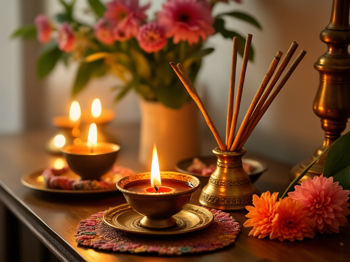
The puja performed on Sri Rama Navami is highly significant for devotees. It is a time for prayer, reflection, and celebration of the ideals that Lord Rama represents—righteousness, devotion, and duty. The puja involves the recitation of hymns and mantras, reading of the Ramayana, and singing of bhajans (devotional songs). Devotees offer fruits, sweets, flowers, and other items to the deity, seeking blessings for peace, prosperity, and protection.
-
Spiritual Growth: Participating in the puja fosters spiritual development by deepening one's connection with divine principles and righteousness.
-
Inner Peace: The recitation of hymns and chanting of mantras during the puja helps calm the mind and bring inner peace.
-
Moral Guidance: Reflecting on the life of Lord Rama offers valuable lessons in morality, duty, and the importance of adhering to dharma (righteousness).
-
Family Unity: Celebrating Sri Rama Navami with family strengthens bonds, as it brings everyone together in devotion and prayer.
-
Prosperity and Protection: Devotees believe that worshiping Lord Rama on this day brings prosperity and protection from negative influences in life.
-
Removal of Obstacles: Performing the puja with sincerity is said to help remove obstacles and difficulties, leading to success in various endeavors.
-
Promotes Compassion and Virtue: The festival inspires devotees to embody the virtues of compassion, kindness, and truthfulness that Lord Rama exemplified.
-
Cultural Preservation: Celebrating Sri Rama Navami helps preserve and promote the rich cultural and spiritual heritage of the Ramayana and its teachings.
Step-by-Step Procedure to Perform Sri Rama Navami Puja
Performing the Sri Rama Navami puja with devotion and sincerity is a beautiful way to honor Lord Rama and seek his blessings. Below is a step-by-step guide to conducting the puja:
1. Preparation Before the Puja
- Cleanse the Home: Begin by thoroughly cleaning the space where the puja will be performed. A clean and sacred environment is essential for the puja.
- Set Up the Puja Altar: Arrange a clean cloth on a table or platform. Place a picture or idol of Lord Rama, along with Sita, Lakshmana, and Hanuman, on the altar. Decorate the altar with flowers, garlands, and a rangoli if desired.
- Puja Samagri (Materials): Gather the necessary items for the puja, including:
- Kalash (water pot)
- Mango leaves
- Coconut
- Sandalwood paste
- Turmeric and Kumkum
- Incense sticks and camphor
- Diyas (lamps)
- Fresh flowers and garlands
- Fruits, sweets (like panakam and kosambari), and prasadam
- Betel leaves and nuts
- A small container of milk, curd, honey, and ghee for Panchamrit
- Rice grains (Akshata) mixed with turmeric
2. Purification
- Personal Cleanliness: Take a bath and wear clean, traditional attire. It is important to be in a calm and focused state of mind before beginning the puja.
- Purify the Puja Area: Sprinkle holy water or Ganga jal around the puja space to purify the area.
3. Invoking Lord Ganesha
- Ganesh Puja: Start by worshiping Lord Ganesha, the remover of obstacles, by lighting a diya and offering flowers, rice, and sweets. Recite the Ganesh mantra to seek his blessings for the successful completion of the puja.
4. Kalash Sthapana (Installation of Kalash)
- Fill a Kalash with water, place mango leaves around its mouth, and put a coconut on top. This symbolizes the presence of all deities during the puja.
- Place the Kalash near the picture or idol of Lord Rama.
5. Invocation of Lord Rama
- Dhyana (Meditation): Meditate on Lord Rama and mentally invite him to the puja. Visualize his divine presence.
- Offerings: Begin the puja by offering sandalwood paste, turmeric, kumkum, flowers, and Akshata to Lord Rama. Light incense sticks and lamps.
6. Ramayana Recitation
- Reading of Ramayana: Recite the relevant chapters from the Ramayana, particularly the portions related to Lord Rama's birth (Bala Kanda). If possible, chant the "Ram Raksha Stotra" and "Sri Ramachandra Kripalu" hymn.
7. Chanting of Mantras
- Rama Taraka Mantra: Recite the "Om Shri Ramaya Namaha" mantra 108 times using a Japa mala (prayer beads).
- Bhajans and Kirtans: Sing devotional songs and bhajans in praise of Lord Rama to create a divine atmosphere.
8. Offering Naivedya (Prasadam)
- Offer fruits, sweets, and other food items prepared for the occasion to Lord Rama. Some traditional offerings include panakam (a sweet drink) and kosambari (a salad made of soaked lentils).
- After offering, perform Aarti by waving a camphor-lit lamp in a circular motion before the deity while ringing a bell.
9. Performing Aarti
- Aarti Ceremony: Light the camphor and perform Aarti, moving the lamp in a circular motion in front of the deity. Sing the Aarti song while doing so, and sprinkle the Akshata (turmeric-coated rice) as a sign of respect and devotion.
- Offer the Aarti to all participants by passing the flame around so everyone can take the blessings by placing their hands over the flame and then touching their eyes.
10. Conclusion of the Puja
- Shanti Path (Peace Invocation): Conclude the puja with a prayer for universal peace and well-being. Recite the Shanti Mantra or other concluding prayers.
- Distribution of Prasadam: Distribute the prasadam to all family members and participants, symbolizing the blessings of Lord Rama.
11. Visarjan (Concluding Ritual)
- Thanksgiving: Offer thanks to Lord Rama and all the deities invoked during the puja. Mentally request them to return to their abodes, concluding the puja.
- Bowing: Bow down and seek blessings from the elders present after the puja.
This step-by-step guide is designed to help you perform Sri Rama Navami puja with devotion, ensuring a spiritually fulfilling experience.